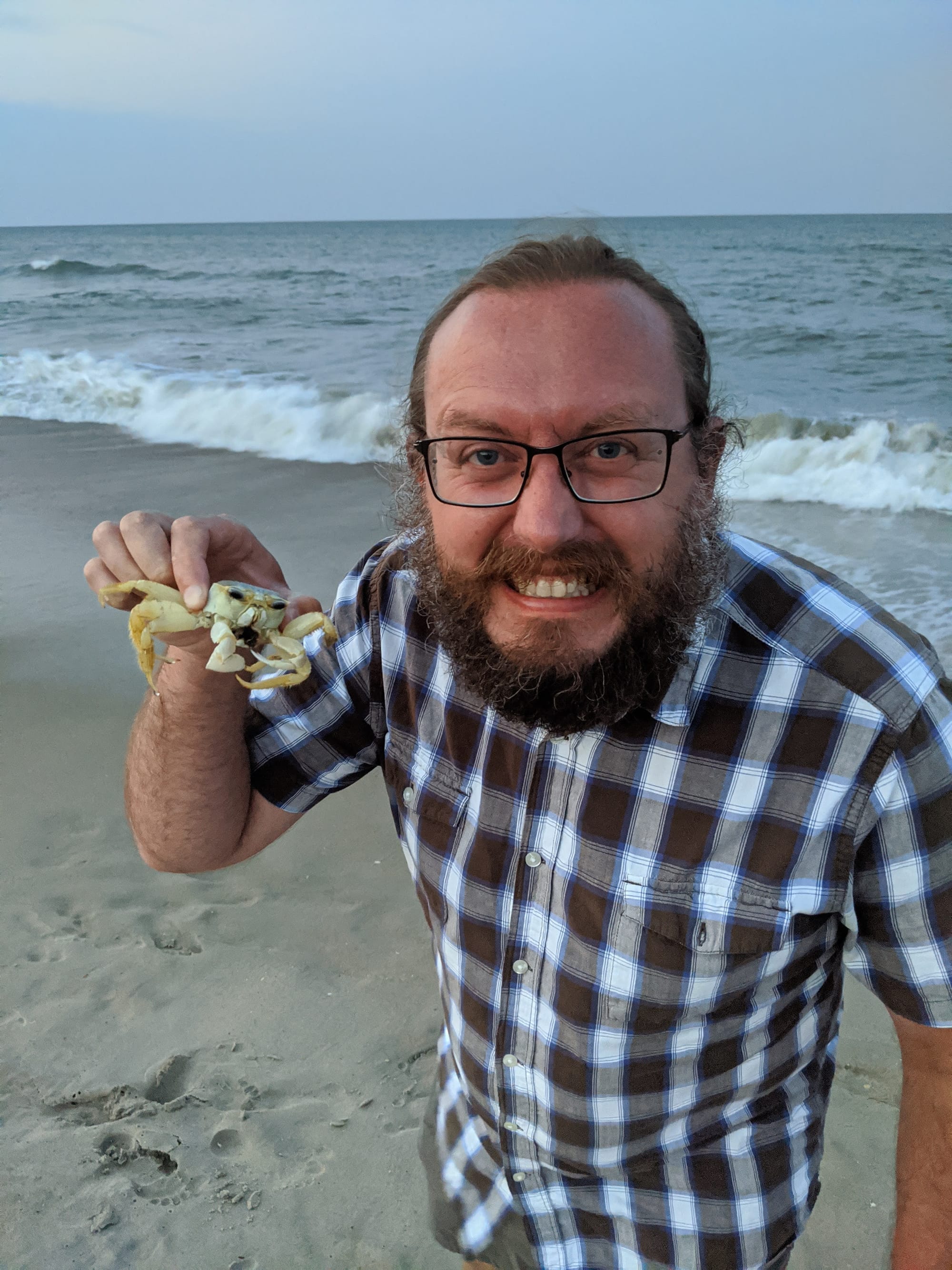
My Friends
It is important to take a moment to speak briefly regarding shelters. The very organizations that are meant to help those who do not have a voice, more often than not, are deemed and or treated as criminal enterprises. Often, shelters in the U.S., then and now, scrape by month to month, attempting to meet a neverending need. The staff often sacrifice financially, at times emotionally, and/ or physically. This occurs in a wealthy society because importance and value increases the further away individuals are from human contact. At times, employees were and even now are met with overt hostility from a community that has deemed poverty, homelessness, and substance use simply unacceptable or criminal. Hooverville. Hoovervilles of the 1930's and '40's. The Hoovervilles of the 1980s. The Hoovervilles of today. The residents of these Hoovervilles are met with ' Pull yourself up by your bootstraps' or face the poor man's prison. The shelter workers dedicate their lives to walking alongside the people, the families of 'Hooverville.' Some of the workers come from the very same Hooverville.
Often, there are tears of celebration for those who have been able to make the next step in their journey for work, sobriety, and/or housing.
There are tears for those whose stories, at times, end with being found dead in a tent, behind a dumpster, or being identified at the city morgue.
As a small child, I was exposed to so many different people from a plethora of backgrounds. It is said that I might be with a person for only five minutes, but they were my friends for that short time. My parents would ask me about this person or that person. I would shrug my shoulders and respond with, 'I don't know.' My parents would press more, ' ok, what is their name?' and I would respond with, 'I don't know,' just 'they're my friend.' Some might not understand this, and it might have been my downfall even as an adult, but whenever I met someone, I simply considered them a friend. No judgment. No bias. Just friend.
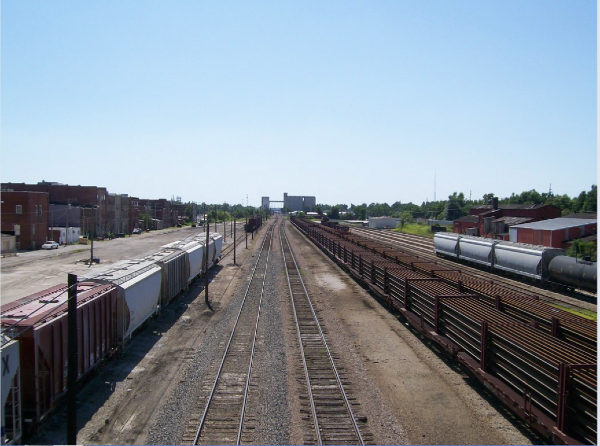
My parents, Erika, Josiah, and I began our time at the shelter in 1986. As mentioned before, the shelter was very basic. If a person had a car, they would park in a narrow gravel parking lot in the back of the mission that bordered the train tracks that went through the city. After walking up to the back of the building and opening the back door, you would walk down a set of steps and be pretty much in the kitchen. Like most shelter kitchens, it was piecemeal with used furnishings and equipment. Though imperfect, it continuously seemed to meet the need for that day, then the day after that, and so on and so forth. In the front right corner of the room was a door; walking through this, you walked into the main room that would be lined with tables. At meal times, guests would find their seats at the different tables. As you walked into the main room, there was a bifurcated staircase to your left. It had the look of an era when it might have allowed elevated guests of wealth from a bygone era to reach the second floor. On the opposite side of the stairs was the bathroom that everyone used. On the second floor was a conglomeration of offices, one-room apartments, and a storage room where they kept dry goods.
The individuals who accessed the services of the shelter included alcoholics, substance users, sex workers, and pimps. There were transient individuals who would show up for a meal, day, or week and then disappear. I remember, at one time, a group of rainbow people made their way through. You just never knew who would walk through the doors. Honestly, that was the beauty of the whole thing. And so, for the next three and a half years, the three of us kids hung out at the shelter. We got to know many different people. This period made an indelible mark on my life regarding where my heart would always be. Kids only see what they are taught to see, molded by those who surround them. Many of the individuals who came into the shelter were simply my friends, nothing more and nothing less. As a kid, I spent hours and days with these unhoused individuals, this being something that really is not allowed in today's world.
When you see a homeless person interact with a child, you often witness a side of the man or woman that is not talked about, a side of them that cannot often be shown because of the viciousness of the streets. Often, you witness a gentleness that they want to share but cannot because of their situation.
Paul, a grizzled old Vietnam vet with a severe drinking problem, would shuffle in. He wore three layers of clothes year-round. The outer layer was a snowmobile suit; the fact that he wore a snowmobile suit all year round in Missouri was unbelievable, between the oppressive heat and the severe humidity. If a person were to look for me, they often would find me on the stairs with Paul. It was there that we made many plans for hunting. You see, we had this plan that when I turned 12, he and I would go hunting for deer. I was so excited, I just could not wait. In reality, which I am sure Paul was very aware of, that moment would never come. But maybe, maybe, it allowed him a moment to dream. To dream of a different time and place, unbeknownst to a little boy who called him friend.
Anthony, who probably influenced my life the most at that time, comes to mind instantly. Anthony, a prominent Black man usually dressed in a white t-shirt, old blue jeans, and worn-out tennis shoes, often worked in the kitchen. He and I were buddies to the core. He would see me and exclaim,’ Nate, the Great!’ in his deep baritone voice. When Anthony was there, we were two peas in a pod. I distinctly remember a moment when he and I were together at the sink where he was washing dishes. He had reached into the big commercial-grade sink to grab something to wash, and inadvertently, his finger was sliced by a knife that he had not seen. I could not understand why everyone was making such a fuss regarding him and the blood. Was my buddy in trouble for cutting himself? As a child, and like almost everyone at that time, I was unaware of Anthony's struggle, an unseen illness that in the 1980s was treated like leprosy. Once a person was diagnosed with it, most everyone shunned and ostracized them because of this incurable illness. You see, he had contracted HIV from a partner who was also an IV substance user, and when he and I connected, he was at the end of his life battling AIDS, a death sentence. I believe it is important to take a moment and acknowledge the kindness and respect that was shown him by the people of the shelter, at a time when communities knew little to nothing about this illness, and many did not care to know.
I still remember the morning when my mom answered the phone and received the message that he had died. As we stood in the kitchen, I watched her as she hung up the phone and sat me down. Through her tears, she explained to me that my buddy, my friend, had died. I remember sobbing and could simply not understand why my friend was gone. I remember going into the shelter at different times. I would wander into the kitchen to see if my buddy Anthony would be standing beside the sink washing dishes. “Nate the Great, I kept expecting to hear. After realizing he was not there, the thought was that he might be at the fridge getting cheese out. Each time, I was greeted with a memory instead of being greeted by Anthony. Another guy, Rob, a skinny, short White guy in recovery from IV drug use, would always sit on the steps after dinner with my sister Erika and me. He always seemed to have the knack of having candy with him. He would then bribe us with the candy to sing. He would teach us songs, and then we would sing them.
Many people touched our lives; some were gentle, and some knew nothing else other than being wild animals. Some reeked of alcohol, urine, and sweat, but they were our friends— and we were theirs.
Our time with them was abbreviated. This is a commonality even today. Often, you begin to learn a story, a story of one’s life, and before you know it, they are gone for various reasons. You are then left thinking about those moments and the shared conversations, wishing that there had been more, grateful for the moments that were had, hoping that someday you will see them again, but also bracing yourself for the day that you might mourn a life gone.
I do not know what happened to Paul or Rob. It is easy to formulate guesses and ideas about where life took these men and many others. There is also a simple beauty in remembering them for the moments that were shared on those stairs in the shelter. Sometimes, it is better not to have all the answers.
These are some of people and experiences that shaped my early years.
'There's a cardboard sign old and bent
Says "Friend for Life 25¢"
When did this start making sense?
Man, it's really getting cold
Sometimes I forget things and I get confused
I could still be working, but they refuse
Now I'm living with the bums, the whores, and the abused
Man, I hate getting old
Homeless, get away from here
Don't give 'em no money, they just spend it on beer
Homeless, will work for food
Do anything that you gotta do when you're homeless
Betty sings a song that no one hears
As the wind begins to freeze her tears
She says, "God, it's been so many years"
She's way past complaining
She sings a heartfelt melody
One that begs for harmony
Hell, it's not what she thought it'd be
But hey, it could be raining
Homeless, get away from here
Don't give 'em no money, they just spend it on beer
Homeless, will work for food
Do anything that you gotta do when you're homeless
You know life ain't easy, it takes work
It takes healing 'cause you're gonna get hurt
You can lose your faith, you can lose your shirt
Lose your way sometime
Ah, you never really have control
Sometimes you just gotta let it go
When the final line unfolds
It don't always rhyme
Homeless, get away from here
Don't give 'em no money, they just spend it on beer
Homeless, will work for food
Do anything that you gotta do when you're homeless
Homeless, get away from here
Don't give 'em no money, they just spend it on beer
Homeless, will work for food
Do anything that you gotta do when you're homeless
Cardboard sign old and bent
Says "Friend for Life 25¢"'- Guy Clark
Member discussion