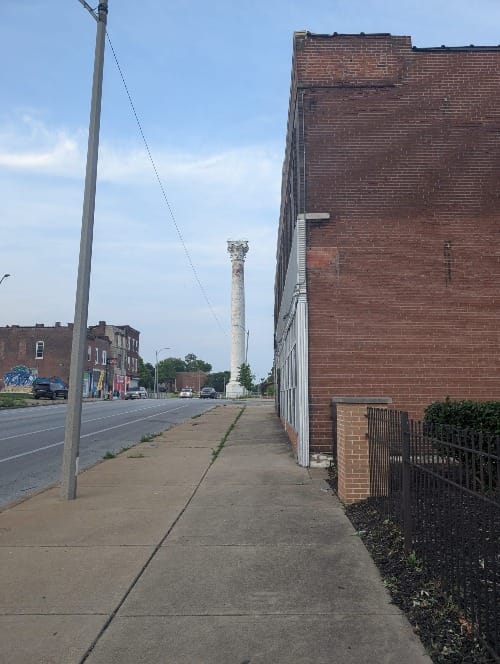
Water Tower and Families
IMPORTANT SAFETY MESSAGE for DR 586 Red Cross Responders: As of 3:10pm CT, the area is under a tornado warning. Please take cover IMMEDIATELY in a safe shelter, away from exterior walls and windows until the all clear is given. Thank you, DR 586-25 Leadership Team
This was the emergency message I received while sitting in the basement of a community center in the Water Tower neighborhood, with twenty-six other people hunkered down near me. As I listened to the tornado sirens outside, I sent text messages to a couple of people whom I held close. I had no idea what might occur, and I wanted to ensure people knew where I was located...
The morning was dark and damp, shrouded in a soft mist. I stood on the sidewalk with my luggage packed for the next two weeks. I had received word that I was being sent to St. Louis, Missouri, due to tornadoes hitting part of the urban area. I was catching a Delta flight first thing and flying through Detroit. Having been deployed before, I had an idea of what to expect, but I still felt a bit of apprehension or nervous energy. Perhaps it was simply the unknowns of what I might encounter.
Waiting there on the sidewalk for my Uber ride, I watched as a car pulled to a stop further down the street. Out of it came two deafening and drunk people. With great effort, they managed to enter the building next to where they had been dropped off. I thought it was a coincidence, or perhaps ironic, that as they were finishing a night of celebration, I was heading to a community where tornadoes had struck.
I landed in St. Louis just after nine thirty in the morning. The connection in Detroit had gone super smoothly. After touching down, I received a text message that I was picking up a rental car from Avis and meeting another person, whom I was also supposed to take to headquarters. After waiting a while to get my checked bag, I went outside where the shuttle buses waited to transport people to the various rental car centers.
It was a peculiar feeling as I breathed in the air while walking down the sidewalk. Even though I was in the city, there was a smell in the air that I had not encountered in over thirty years. It was a warm, humid smell that included perhaps the scents of earth and grass, a bit ironic since I was in the middle of the city, it was hard for me to pinpoint. Either way, it brought back the memories of being a young kid in Springfield. I thought to myself, 'Isn't it interesting how a smell or a taste can steal you away to a past moment in life?' Thirty-seven years later, I was back in Missouri, going to the shelters. The place that once molded me as a child.
I researched the area where the tornado had hit to gain a better understanding of the people I might be serving. The perimeter set up for the area hit within the city was between Lindell Boulevard and O'Fallon Park, encompassing neighborhoods such as Water Tower and Ferguson. As the crow flies, it was an approximate four and a half mile stretch. Two aspects of the storm were uncharacteristic; the first was that, unlike most tornadoes, which typically occur in rural areas, this one struck the city. The second unique situation was that the tornado alarm had not been sounded. Reports were that the individuals in charge of sounding it had been in a meeting. As a result, the community was completely taken aback.
For those who are unfamiliar with Ferguson, Missouri and the surrounding communities, it is important to mention that this is the area that was rocked by the murder of Mike Brown by a police officer and the unrest that followed in it's wake, in 2014, culminating in the governor sending in the state guard in attempts to restore peace.
Another aspect of this area is known as the Delmar Divide. The street symbolizes and visualizes the racial disparities from years of systemic segregation practices. The following statistics were provided by the Red Cross.
North of the Delmar Divide, the population is ninety-eight percent Black. The median home value is $87,000, and the median income is $18,000. Approximately ten percent of the population has a bachelor's degree, and the life expectancy is sixty-seven years.
South of the Delmar Divide, the population is seventy-three percent White, with a median home value of $335,000. Approximately 70% of the population holds a bachelor's degree, has a median income of $50,000, and enjoys a life expectancy of 85 years.
To sum it up, the tornado hit impoverished communities that were already struggling to provide for the individuals who lived in them. However, the stark reality is that this, for the most part, is the norm; the Palisades Fires being an exception, but that disaster was also widely reported in the media. Until I was deployed, I had not seen anything in the media about the tornadoes hitting St. Louis.
It ended up being a twenty-minute drive to where the headquarters were located. Upon reaching it, I was processed in and then sent to a side room, where I received an orientation on the strategies being implemented to meet the needs of the different communities. When I arrived, an estimated 9,000 families had been affected by the storm, with that number likely to increase as disaster assessments continued, two weeks after the storm had hit. This meant that families had gone without electricity, running water, and other essential services for multiple weeks, potentially living in homes deemed unlivable, during which time the slow-moving gears of bureaucracy debated whether people were hurt and bled. This is not talked about when eliminating programs like FEMA. The states would choose who is essential. In my experience, it would not be the Native Americans, the Blacks, Latinos, or the mountain people that is a guarantee. FEMA brought impartiality that states would not do.
Having finished the orientation, I made my way back to the transportation area, where I dropped off the vehicle keys and then located the Mass Care station. I knocked on the door and introduced myself to the older gentleman, who greeted me. He introduced himself as John. He then explained that I would be part of a three-person strike team that would be sent to open a new shelter. The issue, however, was that the building intended for use as a shelter was not ADA compliant. He asked that I make myself comfortable in the breakroom while they figured out what steps would be taken.
During the time while I waited, I watched as other individuals came in and made themselves comfortable. In the following hour, I met Vince and Tom, two different people who would be on the team with me. Vince was from California, and Tom was from Connecticut. After another hour and a half had passed, John approached us again. He explained that no further decisions had been made, and thus, they were at a standstill. When I heard this, I had a flashback to my time in Kentucky, when I spent nine hours at headquarters because decisions were not being made. I then interjected and asked if we could go to our hotels, unpack, and wait there until a decision was made. John agreed to this, and thus Vince would drive both Tom and me to the hotel.
That evening, I began mentally preparing for what it might entail in getting the shelter or shelters up and running. I processed again the risks that might be encountered. In doing this, I remembered a quote that I had read recently, 'We don't want saints and zealots. We want flawed human beings who do their jobs. Just make this an ordinary job that people like to do.' The quote came from a book by Tracy Kidder, which was written regarding helping the homeless. While thinking about the quote, I recalled the motto I had been introduced to while working on the streets. It was something that I had attempted to live by. 'Take no shit, do no harm.'
Member discussion